
Be on the lookout for Kinglets - especially Ruby-crowned Kinglets. Ruby-crowned Kinglet numbers in the teens, 20s and even 30s are being counted in SE PA and Northern DE areas during bird walks in October 2022. It appears they had a great nesting year!
Fun Facts About Kinglets
- Kinglets are very small (smaller than chickadees) birds with a rather large head in comparison to the rest of its body. They seemingly posses endless energy while they nearly continuosly flap their wings in pursuit of small insects from tree foliage.
- Kinglets are only found in North America and consist of two species: the Ruby-crowned Kinglet and the Golden-crowned Kinglet
- Both Kinglets breed in the Northern Boreal Forest in Canada and parts of extreme Northern U.S during the summer months
- From roughly September to April, Kinglet species can be found throughout the U.S. all the way down to Mexico. They love shrubby areas as well as deciduos and conifer trees while they are in their wintering grounds.
- Ruby-crowned Kinglets have a distinctive white eyering and a single white wingbar to set itself apart from other similar looking birds. Male birds have a spectacular ruby cap when it decides to show it off. Unfortunately the ruby cap is typically hidden, only to be revealed when its excited or trying to attract a mate.
- Rubys can be attracted to bird feeders if you offer the right food. Suet products, mealworms, sunflower chips and peanuts pieces are foods that it will gladly consume.
- Although the tiniest of birds, the Ruby-crowned Kinglet can lay up to 12 eggs in a nest. With each egg weighing about a fifteith of an ounce, the total clutch of eggs weighs about as much as the female bird. Goldens have similar sized broods as well.
- The oldest ruby ever recorded was 8 years and 8 months old - recaptured in Texas.
- Kinglets typically forage high up in a tree, gleaning small insects and spiders from the surface of leaves and branches while they flitter about leaf-to-leaf in dizzying display of quick energy.
- A typical diet consists of aphids, wasps, crickets, springtails, bark beetles and spiders. They will also eat seeds and berries in the winter.
- The Golden-crowned looks a bit different than the ruby with a black and white striped head and a beautiful lemony, golden crown - often visible if you have the right viewing angle. Both sexes have the gold crown, but the male can be seen displaying his cap to the fullest extent - high and proud - during nesting season.
- Goldens can survive up to -40F nights during the winter. One tough little bird.
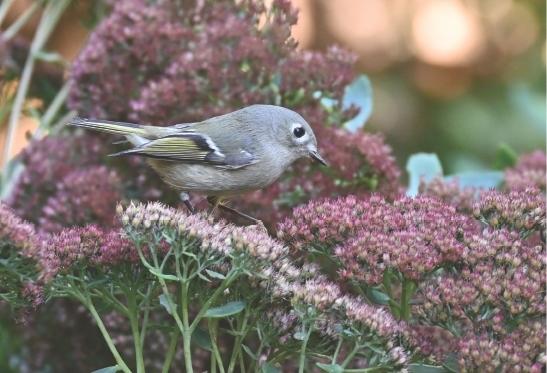
Ruby-crowned Kinglet