
Do Your Best by Welcoming the "Visiting Birds of Winter" to Your Backyard
Believe it or not, our area in SE Pennsylvania / northern Delaware is actually a more comfortable place for some birds to overwinter. I'm specifically referring to birds that normally aren't here in the warmer months and prefer to nest and raise their young in more elevated or northern locations of the U.S and Canada. Like a relative or old friend, these birds will stop by for a winter visit, especially if we roll out the hospitality and provide them the surroundings and the food they like.
Below is a list of visiting birds to keep a look out for during the winter. They may come to certain feeders in your yard if you provide the right food in the proper location. Being near woods helps increase your odds significantly. Some other "winter only" birds will be in specific habitats and are unlikely to visit your backyard. However, if you venture out to one of the many wildlife sanctuaries in our area, or a nicely wooded lot or large field, you will likely see them if you know where and when to look. Having a tray or platform feeder is a big plus for attracting all birds in the winter - especially the ground dwelling ones that visit us. Just to be clear, there are other year-round resident birds that are here during the winter as well that are not covered in this piece.
To help you with identification of the birds and the foods and feeders they like, I highly recommend the Cornell Lab's FeederWatch website.
Also, click on the bird names below to see pictures of the species on Cornell's All About Birds website.
Discover & enjoy the birds. ~Chris, owner of the Glen Mills, PA WBU
Here are a few winter visitors that you will likely see in your backyard:
Red-breasted Nuthatch - These brave little birds are a close relative to the perennial favorite, White-breasted Nuthatch. RB Nuthatches usually skip a winter, but some places around here may see them most every winter. They are a good bit smaller than their cousins, the WB Nuthatch, but they are commensurately more brave than them and will often fly in close proximity to you while you are filling the feeder. Loves sunflower seeds, peanut pieces and suet.
Purple Finch - Often confused with its close relative, House Finch (who are here year-round), they are often bigger and the males are more raspberry red. The coloration can be misleading and is heavily influenced by their diet, so they do take some practice to identify. A good reference for helping to distinguish the two apart can be found at Cornell's tricky IDs website. Loves a good seed blend with sunflower seeds and likes Nyger (thistle) as well.
Pine Siskin - The fall of 2020, was a banner year for Pine Siskins in this area. Closely related to the American Goldfinch, they differ by having many dark streaks on their breast and back. They also have a more pointed beak and are slightly more active and gregarious than American Goldfinch. Pine Siskins are very sporadic in our area and often go unnoticed because of their similarity to their cousin's winter-time plumage, but some years there is an obvious "invasion" or irruption where many birds descend from the north and enjoy our feeder offerings. Loves Nyger (thistle) and sunflower chips.
White-throated Sparrow - These are very prevalent in our area and readily come to our feeding stations to clean up food on the ground. Easily identified by their distinct white throats and broad striped head. Loves millet.
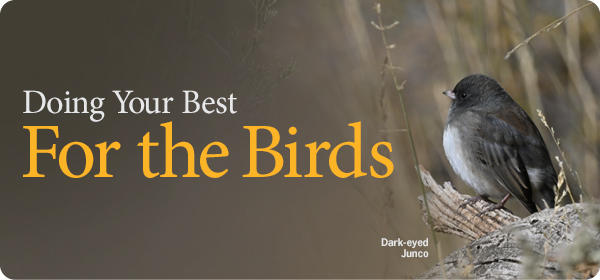
Dark-eyed Junco - Also, another commoner at the ground by our feeders during the winter. Commonly referred to as "snow birds" because of their large numbers during the winter months. You can tell them by their dark upper parts and light colored bellies and the flash of white on their wings when they flit around your yard. Loves millet and other small seeds, but also has a taste for Bark Butter products as well.
Fox Sparrow - These are a bit chunkier than Song Sparrows and are generally darker with thicker streaking. Found mainly feeding on the ground. Loves millet and other small seeds.
American Tree Sparrow - These birds have a plump body with long tail and rusty cap. The breast is un-streaked and grayish in color with a dark smudge in the center. Loves weedy fields and visits feeders. Prefers millet at the feeder.
These birds may come to your backyard area if the surroundings are right and you provide the appropriate foods:
White-crowned Sparrow - Much like the White-throated except without the white throat and not as prevalent as their cousins. You can find these special little birds cleaning up on the ground. Millet and other small seeds are a favorite.
Yellow-bellied Sapsucker - The only woodpecker in our area that doesn't hang around all year, loves to tap several holes on the trunk of tree to lap up the seeping sap. You can attract them with suet and Bark Butter.as well.
Brown Creeper - These shy little birds are very appropriately named in that they quietly creep up the trunk of a tree, blending in with their tree bark-like camouflage, looking for insect eggs, larva and adults. They prefer large mature trees, and will not come to a community feeder, but will readily eat Bark Butter or peanut butter spread on the trunk of a tree away from busy bird feeders.
Ruby-crowned Kinglet - Constantly moving little birds with an oft hidden patch of red feathers on its' cap (male only). They love conifer trees and will scour them for insects and sometimes seeds in the winter. They have a distinctive flicking of the wings as they forage in the trees. They love suet and Bark Butter.
Evening Grosbeak - Much like the Pine Siskin but not as prevalent, this species is sporadic in the area but some years will have a stronger showing due to lack of food in its' northern home. A beautiful large, yellow and black bird with a distinctive yellow eyebrow and broad beak. Loves sunflower seeds.
These birds you might need to leave your neighborhood to see:
Golden-crowned Kinglet - Close cousin of the RC Kinglet, this little one (both sexes) has a lemony gold crown with bold black eyebrow stripes. Similar in nature to the RC Kinglet. Usually found higher up in mature trees. Unlikely to come to suet feeders.
Winter Wren - Small, round, brown bird bubbling with energy and a short tail often sticking straight up. Found in the brushy understory of woods, their song is loud - similar to their cousins, Carolina Wren and House Wren. If you are adjacent to woods you may be able to attract them with Bark Butter at the base of a tree trunk.
Hermit Thrush - Similar to the Wood Thrush but smaller, this species typically hangs out in the woods, kicking up leaves searching for insects or berries. Although rarely found at feeders, Hermit Thrushes can be attracted to feeders with mealworms, Bark Butter or fruit during migration in fall or spring. Or, if you're adjacent to woods you may be able to attract with Bark Butter smeared at the base of a tree at the edge of the woods.